Short Ticketing Detection with CUBIC
AI-powered fare evasion detection framework analysing 6.5M journey records, with findings widely covered by media and translated into real-world deployment.
Short Ticketing Detection Framework Analysis Report
A joint research project between CUBIC and independent researchers from Imperial College London’s AIDA Lab.
Yuyang Miao, Huijun Xing, Tony G. Constantinides, and Danilo P. Mandic.
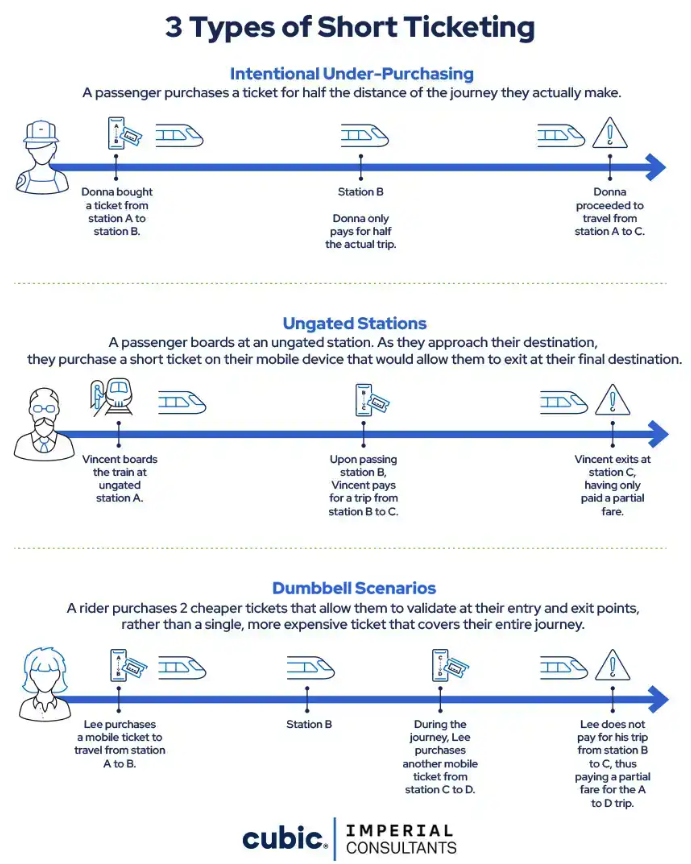
Fare evasion costs UK rail £240 million every year. Short ticketing — where passengers pay for only part of a journey instead of end-to-end — is one of the key drivers of revenue loss. This comprehensive report, produced in collaboration with the team from Imperial College London, analysed 6.5 million journey records from 100 stations using a multi-expert AI framework to reveal how data can help tackle this issue head-on.
Key Highlights
- AI-Powered Detection: The framework applied four unsupervised machine learning algorithms to detect anomalous travel behaviours without relying on labelled data: Isolation Forest, Local Outlier Factor, One-Class SVM, and Mahalanobis Distance.
- Fraud Identification: The newly introduced AI classification system identified 30 high-risk stations and five distinct short ticketing patterns, including “Ghost Station” and “Black-Hole” behaviours.
- Operational Impact: The framework enables targeted deployment of revenue protection staff, replacing random inspections with data-driven interventions.
- Strategic Value: This research demonstrates how AI can automate short ticketing detection at scale, offering a replicable model for transit authorities globally to combat fare evasion more effectively.
Impact
The research findings have been widely covered by media outlets and have been translated into real-world operational outcomes, demonstrating the practical value of academic–industry collaboration.